
Your practice may not have a demand problem. You may have a follow-up problem.
Patients call while your front desk is helping someone else. Web forms arrive after hours. Voicemails sit in a shared inbox. A prospective patient waits for a response, then books with another provider.
Every missed connection creates friction. Over time, those small gaps become lost appointments, empty schedule blocks, and revenue you cannot recover.
Industry reports have found that small healthcare practices can miss a significant share of incoming calls during business hours. The American Chiropractic Association has highlighted missed calls as a direct threat to patient access and practice growth.
The solution is not always more advertising. It is a clear system that captures every inquiry, responds quickly, removes booking friction, and continues working when your team is busy.
Here is the five-step booking framework Brand Lift 360 uses to help independent practices turn more patient interest into confirmed appointments.
Why More Leads Will Not Fix a Broken Booking Process
You can increase traffic, improve your rankings, and launch a new ad campaign. But if your practice does not respond consistently after a patient reaches out, more leads simply create more opportunities to lose patients.
Common breakdowns include:
- Missed calls with no structured callback process
- Web forms that go to an inbox no one checks regularly
- Staff members who are unsure who owns follow-up
- Long or confusing online booking forms
- No reminders after an appointment is scheduled
- No process for recovering cancellations and no-shows
- Marketing reports that show clicks instead of booked appointments
You do not need another disconnected tool or a complicated process. You need one patient-focused workflow that your team can follow and measure.
Step 1: Capture Every Patient Inquiry in One System
The first step is visibility.
If your calls, web forms, texts, social messages, and appointment requests live in separate places, follow-up will always depend on memory. That creates inconsistent patient experiences and makes it difficult to know which opportunities are still open.
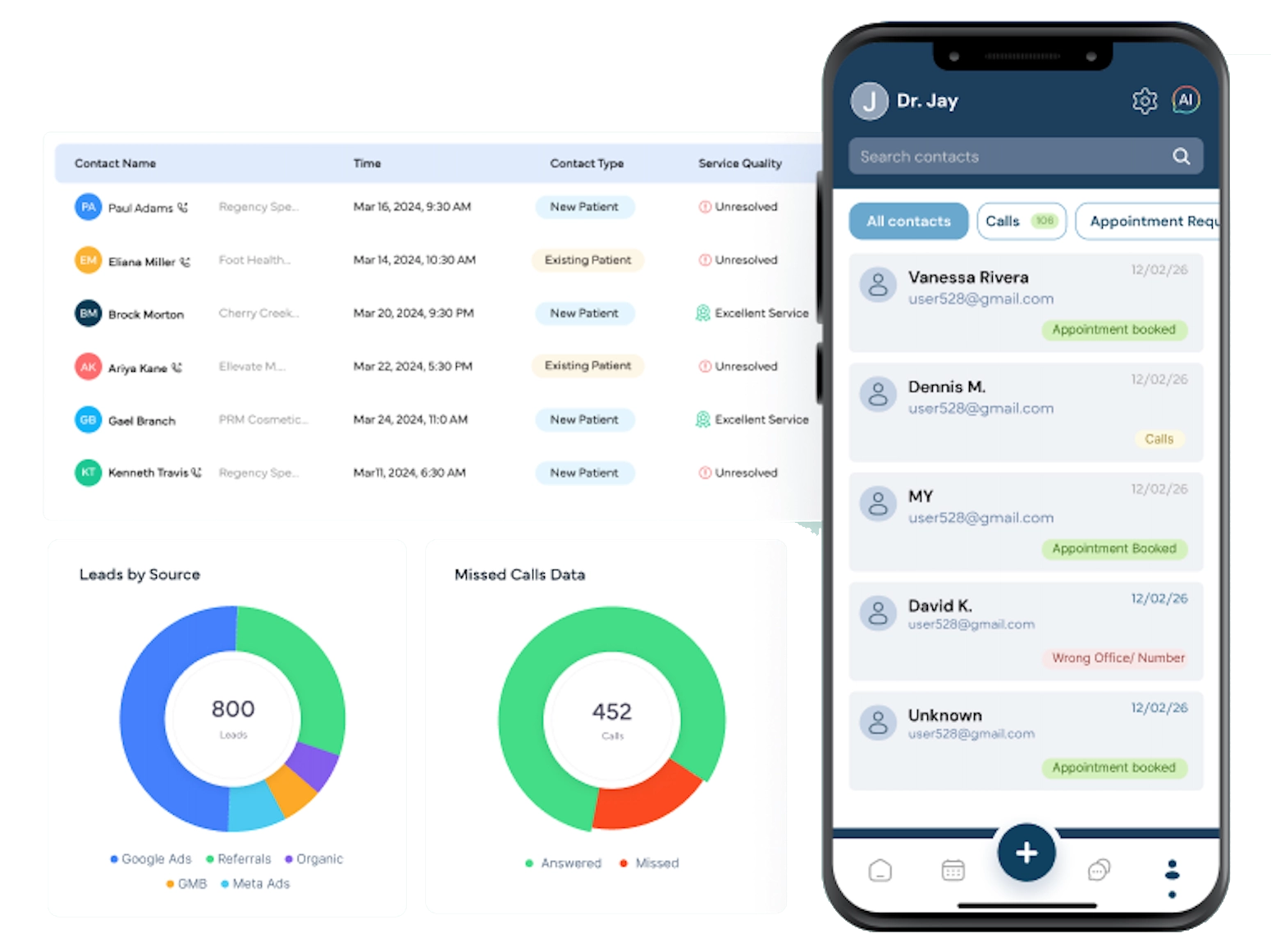
Create one bookings inbox. Every inquiry should enter a central system where your team can see the contact, reason for reaching out, current status, and next action.
Your process should capture:
- New phone calls and voicemails
- Website contact and appointment forms
- Text messages and social media inquiries
- Online booking activity
- Cancellations and rescheduling requests
- Incomplete forms and abandoned booking attempts
Assign clear ownership. A shared inbox is not enough. Someone must be responsible for checking it, responding, and closing the loop.
Define simple standards:
- Who reviews new inquiries?
- How often is the queue checked?
- What qualifies as a completed follow-up?
- When does an inquiry move to a second or third attempt?
- How are urgent or clinical questions escalated?
A visible process turns missed calls into trackable opportunities instead of forgotten tasks.
Step 2: Convert Calls With a Simple Booking Script
Your front desk team should not have to improvise every conversation.
A short, repeatable script helps staff guide patients toward the right next step without sounding rushed or robotic. The goal is not to pressure someone into booking. The goal is to make the decision easier.
Use a three-part structure:
1. Diagnose the reason for the call
Start with a clear, open question:
“What prompted you to reach out today?”
This helps your team understand whether the caller needs a consultation, follow-up visit, treatment information, insurance assistance, or another type of support.
2. Prescribe the next step
Once the reason is clear, confidently recommend the appropriate appointment:
“Based on what you shared, the best next step is a consultation with Dr. ____. We have an opening on Tuesday or Thursday. Which works better for you?”
This is more effective than ending with, “Would you like to schedule?” without providing direction.
3. Confirm the appointment
Finish with a specific choice:
“Let’s reserve Tuesday at 3:30 p.m. for you. Is that a good time?”
Give staff the information they need. Build a quick reference guide that connects common reasons for calling with the correct appointment type, provider, duration, and preparation instructions.
Every live call should end with one of two outcomes:
- A confirmed appointment
- A documented follow-up action with an owner and deadline
Instead of leaving patients in a vague “we will get back to you” process, give them a clear path forward.
Step 3: Set a Speed-to-Lead Standard
Fast follow-up matters because patient intent changes quickly.
Someone who submits a form today may be comparing several practices. Someone who calls after work may be ready to schedule immediately. If your practice waits until tomorrow, that patient may already have chosen another provider.
Set a practical response standard for every channel.
Acknowledge quickly. Send an immediate confirmation when a form is submitted or a call is missed. The message should be simple and avoid unnecessary protected health information.
For example:
“Hi [Name], this is [Practice]. We received your message and will follow up shortly. If you would like to schedule, you can reply here or use this booking link: [link].”
Respond personally. Automation should bridge the gap, not replace appropriate human support. A team member should review the inquiry and complete the next step during your defined service window.
Track response time. Monitor:
- Time from inquiry to first acknowledgment
- Time from inquiry to human response
- Inquiry-to-appointment conversion rate
- Number of contact attempts
- Bookings recovered from missed calls
The CallRail healthcare intake guide also emphasizes the importance of connecting intake activity to measurable outcomes rather than relying on disconnected marketing metrics.
Your target should be simple: no high-intent inquiry sits without a clear next action.
Step 4: Make Self-Scheduling Easy
Patients do not always want to call. They may be working, caring for a family member, or researching providers after hours.
If booking requires a phone call during limited office hours, you create an unnecessary barrier.
Offer mobile-first self-scheduling. A patient should be able to move from your website to a suitable appointment time with minimal steps. Keep the process focused on scheduling. Collect detailed clinical information through secure intake forms after the appointment is reserved.
A strong booking flow should:
- Display a clear “Book an Appointment” button
- Work smoothly on mobile devices
- Ask only for necessary scheduling information
- Show available appointment types and times
- Confirm the provider, date, time, and location
- Provide secure intake instructions after booking
- Make rescheduling straightforward
Use the right amount of information. Long forms can discourage patients before they finish. Start with the essentials, such as name, contact information, preferred service, and appointment availability.
Then use your confirmation message to explain what happens next.
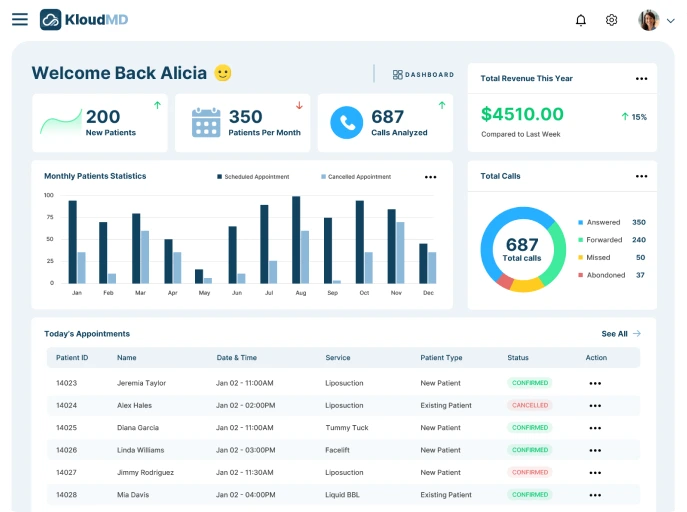
Your AI-powered CRM platform can connect scheduling, texting, intake, reminders, and reporting in one workflow. That reduces the number of systems your team must monitor and gives you a clearer view of the patient journey.
Step 5: Protect Bookings With Reminders and Reactivation
A booked appointment is not the final result. It is the next opportunity to create a reliable patient experience.
Patients forget. Schedules change. Transportation issues arise. Without reminders and recovery workflows, your team loses appointments that were already won.
Send useful reminders. A practical reminder sequence may include:
- Confirmation immediately after booking
- Reminder 24 hours before the appointment
- Reminder a few hours before the appointment
- Simple instructions for confirming or rescheduling
Make each message actionable:
“Reply C to confirm or R to reschedule. Please call the office if you need assistance.”
Recover cancellations and no-shows. Do not let an empty appointment disappear from the schedule. Send a prompt, professional message with available options:
“We missed you today. We would be happy to help you reschedule. We have openings on Wednesday at 10:00 a.m. or Friday at 2:00 p.m. Which works better?”
Reactivate older opportunities. Your database may include people who requested information, started a form, postponed treatment, or never scheduled a follow-up. A patient nurture campaign can reconnect with these contacts using relevant, compliant messaging.
The goal is not to send more messages. The goal is to make the next step clear and timely.
Measure Booked Appointments: Not Just Marketing Activity
A strong booking framework gives you better reporting.
Instead of asking only how many clicks, impressions, or leads you generated, track the metrics that affect your schedule:
- Missed-call rate
- Average response time
- Inquiry-to-booking conversion rate
- Self-scheduled appointments
- Confirmation rate
- Cancellation and no-show rate
- Reactivated patients
- Cost per booked appointment
- Revenue by marketing source
This is the difference between activity reporting and growth reporting.
Your Booking Framework is designed to connect patient interest to measurable appointment outcomes. You can see where leads enter, where they stall, and which workflows help move them forward.
You Do Not Need More Complexity
You may be concerned that improving your booking process will require new staff, a major technology project, or a complete operational overhaul.
It should not.
You need a structured system that fits your current practice, existing calendars, staffing model, and compliance requirements. Automation can handle repetitive acknowledgments, reminders, routing, and follow-up while your team focuses on conversations that require judgment and care.
You also do not need to manage several disconnected vendors. Brand Lift 360 combines full-stack healthcare marketing with AI CRM support, including website conversion, local SEO, paid advertising, lead nurturing, reputation management, and performance reporting.
We focus on measurable patient growth: not just clicks.
Start Recovering More Booked Appointments
Missed calls and slow follow-ups are not unavoidable parts of running an independent practice. They are workflow problems with practical solutions.
Capture every inquiry. Respond quickly. Make booking easy. Protect scheduled visits. Measure the full path from first contact to confirmed appointment.
If you want to identify where your practice is losing patient opportunities, schedule a low-pressure consultation. We will review your current booking process, identify the largest gaps, and outline a practical path forward.
Schedule a consultation to see how the framework can work for your practice.